
A jacket does more than add a layer. Its collar, closure, colour blocking and overall shape decide whether it feels easy at a family dinner, practical for a campus day or right for an evening out. That is why choosing by a product photo alone often leads to a jacket that is good in isolation but does not work with the clothes already in your wardrobe.
This guide explains five men's leather jacket styles through the design details you can actually see online. It is a style guide, not a claim that one silhouette is better made than another. Use it to narrow your choices, then read the individual product page for the current price, sizing, material information and availability.
Choose the style before the colour or trend
Most men do not need a large jacket collection. One well-chosen style can cover most cool-weather plans if it has the right level of formality and leaves enough room for the way you layer. Start with three questions:
- Where will you wear it most? A college day, commute and weekend errands favour a more relaxed design; dinners or smart-casual workdays often favour a cleaner collar and front.
- What do you wear underneath? If your default is a T-shirt or fine knit, a structured collar is easy to manage. If you regularly wear hoodies, a hooded jacket or a roomier neckline may feel more natural.
- How much visual detail do you like? A plain, single-colour jacket is versatile. Contrast panels, diagonal zips and extra pockets become the focal point, so the rest of the outfit should stay quieter.
Style names are useful shorthand, but they do not tell you everything about the outer shell, lining or construction. Always check the product description and ask the seller to clarify any material detail that affects your decision. For a fuller purchasing checklist, see our guide to choosing a leather jacket in Pakistan.
Five men's leather jacket styles explained
1. The collared jacket: the most adaptable starting point
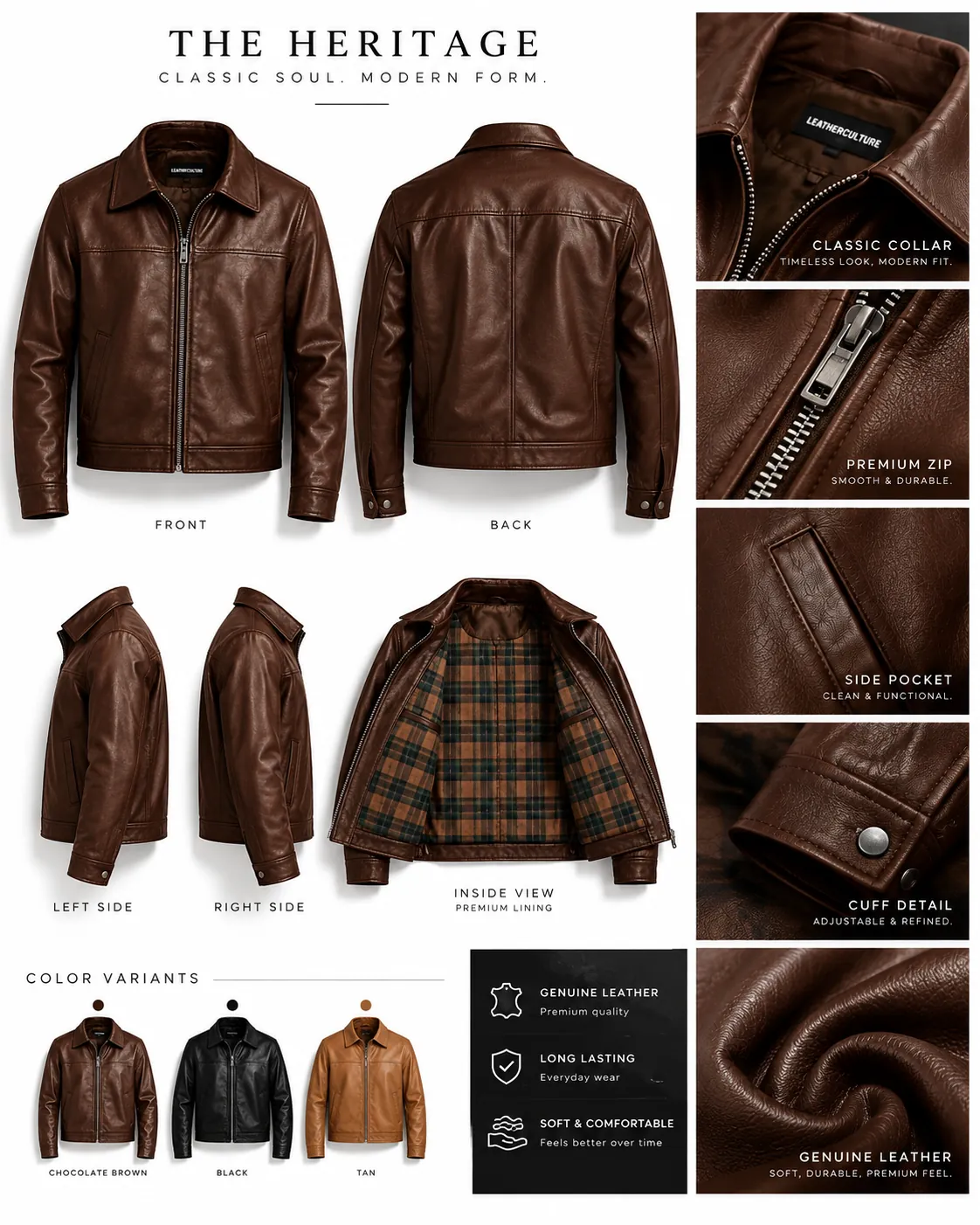
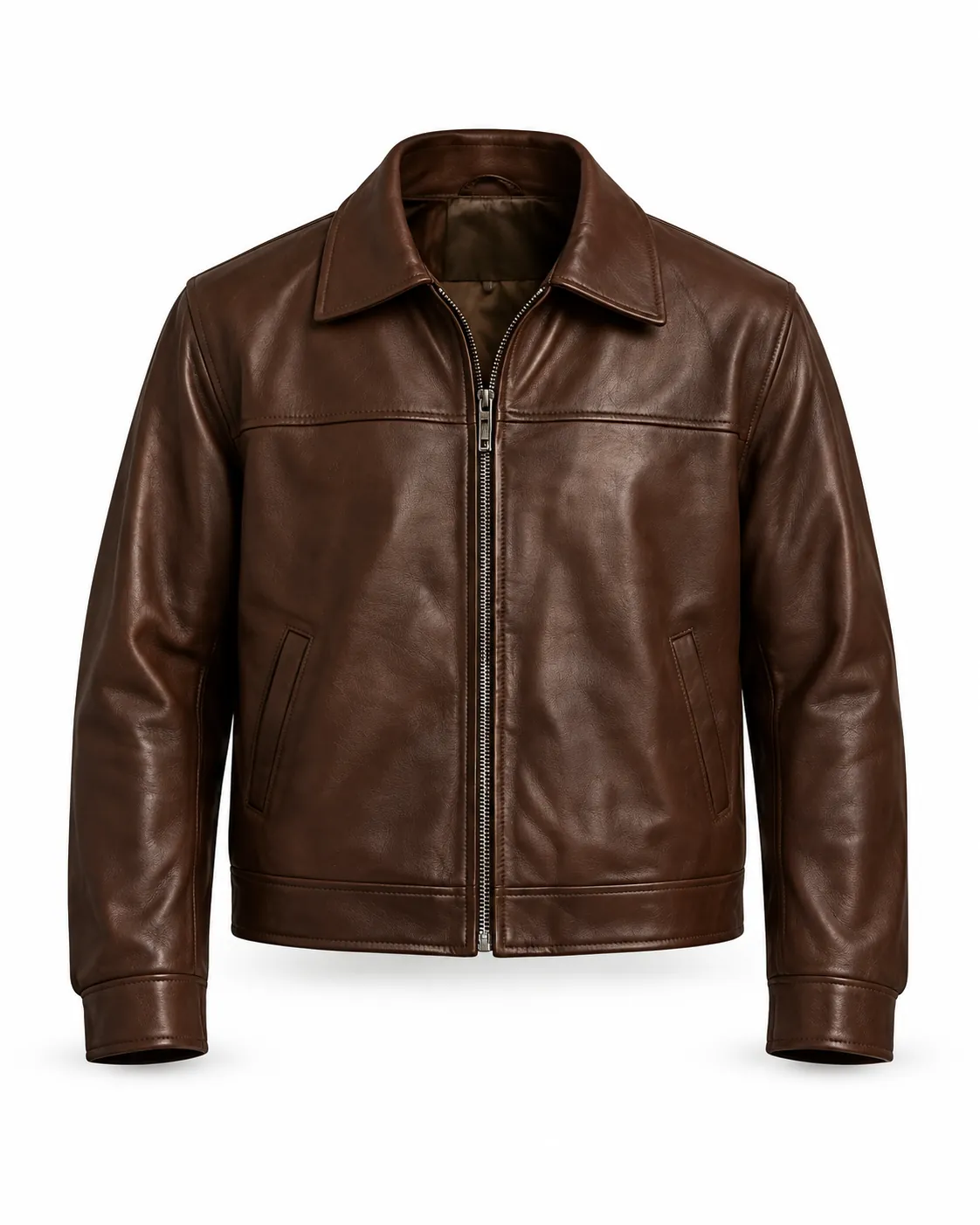
A point collar makes a jacket feel familiar because it sits in the same visual family as a shirt or casual overshirt. It is usually the easiest option for someone buying a first jacket: it can sit over a crew-neck tee and jeans at the weekend, then move to a plain shirt and chinos for a dinner or a relaxed office day.
The Heritage Collared Jacket is the collared example in our collection. Its brown colour changes the mood from black: it tends to work especially well with cream, stone, navy, olive and blue denim. Keep the trousers straight or gently tapered, and let the collar sit naturally rather than forcing it flat under a thick hood.
Choose a collared design if: you want one jacket for several settings, prefer classic lines, or already wear shirts, knitwear, chinos and dark denim.
2. The stand-collar jacket: clean and streamlined
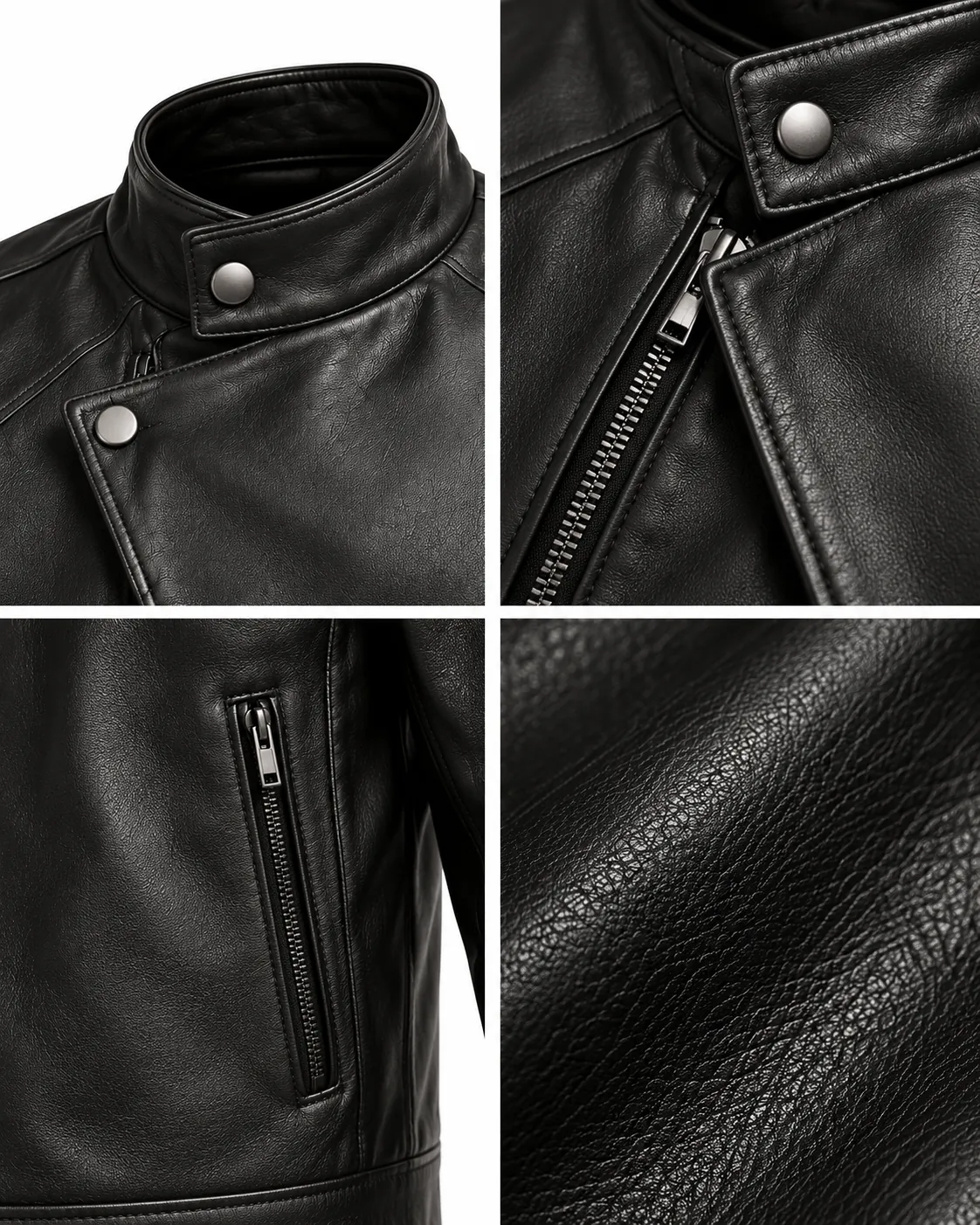
A stand collar, sometimes called a band collar, rises around the neck instead of folding out. It gives the jacket a neater, more modern outline and keeps the front free of the visual width created by a point collar. This makes it a natural partner for plain T-shirts, fine-gauge knitwear and simple trousers.
The Nomad Stand Collar Jacket shows how this shape can keep an outfit understated even when the colour is not black. Olive works well with black, charcoal, white, ecru and dark denim. Because the neckline is already defined, a bulky hood underneath can feel crowded; a light knit, long-sleeve tee or shirt normally looks more balanced.
Choose a stand-collar design if: you like minimal outfits, want a sharper evening look, or prefer a jacket whose collar will not compete with a shirt collar.
3. The hooded jacket: casual and practical-looking
A built-in hood instantly moves a jacket towards streetwear and everyday wear. It frames the upper body and adds visual bulk at the back, which is why it works best with simple trousers and clean trainers. The hood is a design feature; do not treat a fashion jacket as protective motorbike equipment.
Our Blade Hooded Jacket pairs a black body with angular front panels. Let it be the most detailed piece in the outfit: try a plain white, grey or black top, straight jeans or cargos, and trainers with little branding. A hooded design is excellent for university, travel and casual winter plans, but it is less natural with formal trousers and dress shoes.
Choose a hooded design if: comfort and a casual feel matter most, you wear trainers often, or you want the jacket to be the statement piece in a simple outfit.
4. The asymmetric-zip jacket: distinctive without extra colour
An asymmetric closure runs diagonally instead of straight down the centre. That line creates movement across the chest and gives the jacket a bolder character even in black. It is often the right choice for someone whose wardrobe is already mostly monochrome and who wants a stronger shape without adding a graphic print.
The Rune Asymmetric Jacket is easiest to style with low-contrast basics: black or charcoal trousers, a plain tee or fine knit, and dark boots or restrained trainers. Avoid a loud shirt, a large belt buckle and busy accessories all at once. The diagonal zip is enough of a focal point on its own.
Choose an asymmetric design if: you prefer a sharper, more directional look, often dress in black or grey, and are comfortable with the jacket drawing attention.
5. The contrast-panel jacket: sporty and expressive
Contrast panels use a second colour to emphasise the shoulders, sleeves or chest. The result feels sportier and more youthful than a single-colour jacket. A panelled style does not need many competing layers: plain top, dark trousers and simple shoes are usually enough.
The Vibe Contrast Panel Jacket uses white shoulder and sleeve panels against black. Pair it with a black or white tee and dark jeans when you want the jacket to lead. If you add bright trousers, bold trainers and a printed top, the outfit can look fragmented. Keep two or three colours in the whole look and repeat one of the panel colours elsewhere if you want a more coordinated result.
Choose a contrast-panel design if: you like a visible statement, mostly wear casual clothes, and want an easy weekend or campus jacket rather than a quiet all-purpose layer.
How the five styles compare
| Style | Overall feel | Best with | Consider before buying |
|---|---|---|---|
| Collared | Classic and adaptable | Shirts, light knits, chinos, dark denim | Check that the collar sits comfortably when layered. |
| Stand collar | Clean and streamlined | Plain tees, fine knits, simple trousers | A thick hood underneath can crowd the neckline. |
| Hooded | Relaxed and casual | Tees, jeans, cargo trousers, trainers | It is less suited to formal or very tailored outfits. |
| Asymmetric zip | Bold and directional | Monochrome basics, dark denim, boots | Keep the rest of the outfit quiet so the zip line stands out. |
| Contrast panels | Sporty and expressive | Plain black or white tops, dark trousers | Limit other strong colours and logos. |
Match the jacket to your wardrobe and routine
The quickest way to avoid an impulse buy is to picture three outfits you will actually wear next week. If you cannot pair a jacket with three existing combinations, it may be a great image but not a useful purchase.
- For university or casual days: hooded and contrast-panel styles are the easiest fit with tees, denim, cargos and trainers.
- For dinners, family visits or smart-casual work: a collared or stand-collar jacket can look finished over a knit or plain shirt without feeling overdressed.
- For evenings and city plans: a stand-collar or asymmetric jacket gives a more deliberate outline with dark, simple separates.
- For travel: choose the style you can take off, carry and layer without constantly adjusting it. A plain design usually works across more stops than a very detailed one.
Colour matters after shape. Black is the most flexible base for grey, white, navy and dark denim. Brown brings warmth to cream, olive and blue denim. Olive works best when the rest of the outfit stays neutral. For practical outfit combinations, read how to wear a leather jacket for men in Pakistan.
Fit, colour and layering checks that affect every style
Whichever design you choose, a good-looking silhouette depends on fit. The shoulder seam should sit close to your natural shoulder; sleeves should leave your hands usable; and the jacket should close without pulling sharply across the chest. A letter size on its own is not enough because brands use different measurements.
Compare the product measurements with a jacket you already own and enjoy wearing. Measure the chest width, shoulders, sleeve length and body length while it is laid flat. Then decide what you normally wear underneath. If the jacket is for a cold evening over a light knit, do that comparison with the extra layer in mind rather than choosing the smallest possible fit.
Avoid buying based on a model photo alone. Look at the collar, cuffs, side view, back and closure as well as the front. Our leather jacket size guide explains the measuring process in more detail. If any garment or body measurement is unclear, contact the store before placing the order.
What to verify before buying a jacket online
Style should guide the shortlist, but the final decision needs practical information. Before paying, check the individual product page and checkout for current information.
- Open the exact product page. Confirm the selected design, price, available size and stock rather than relying on an old social post or screenshot.
- Read the material and care information. A style name or photo cannot confirm the outer-shell material, grade or care requirements. Ask for clarification when it matters to you.
- Check every measurement you need. Compare a finished garment measurement with a garment you own; do not assume it is the same as a body measurement.
- Review all images. Use close-ups to inspect collar, pockets, cuffs, closure and back. The product photos help you understand design, not replace written specifications.
- Confirm the delivery total and returns policy. Read the current returns and refund policy before ordering, especially when you are between sizes.
Once it arrives, follow the garment's own care label first. For general storage and handling pointers, see our leather jacket care guide for Pakistan.
Frequently asked questions about men's leather jacket styles
Which leather jacket style is the most versatile for men?
A collared, single-colour jacket is usually the easiest starting point because it works with casual denim and can also look smart with chinos or a plain shirt. The best choice still depends on the clothes and occasions you have most often.
Are hooded leather jackets formal enough for dinner or work?
A hooded design reads casual. It can work for a relaxed dinner or informal workplace, but a collared or stand-collar style is generally easier to dress up with shirts, knitwear and smarter trousers.
What should I wear with an asymmetric jacket?
Use plain, low-contrast pieces such as a black, grey or white top with dark trousers. The diagonal closure is already the visual focus, so simple shoes and minimal branding keep the outfit balanced.
Can I decide a jacket's material from its style or price?
No. A collar shape, product title, photograph or price cannot by itself verify the outer-shell material or grade. Read the written product information and ask the seller about any detail that affects your purchase.
How do I find the right size online?
Compare the listed garment measurements with a jacket that fits you well, and allow for the layers you expect to wear underneath. Use the LeatherCulture size guide and request help before ordering if the size information is incomplete.