
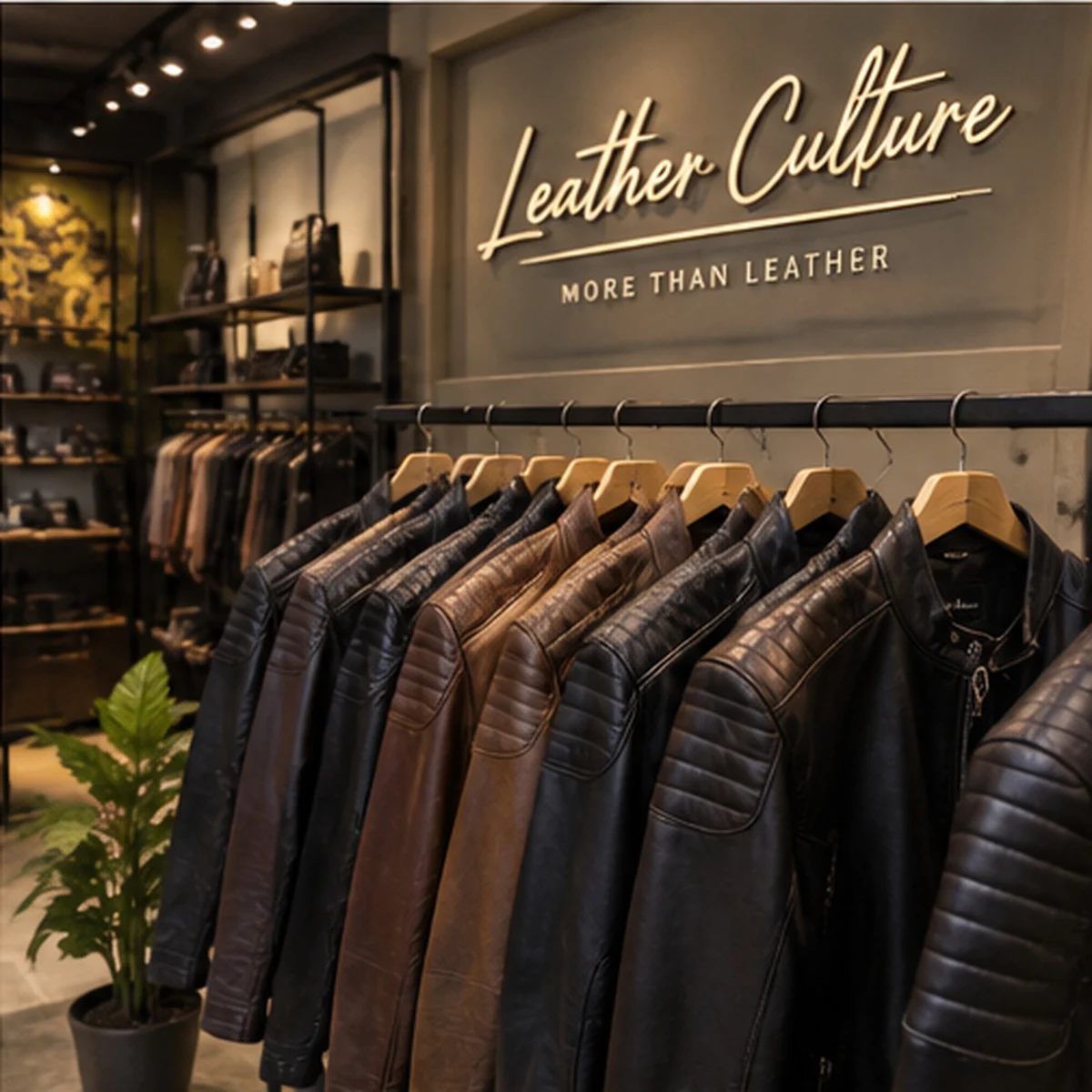
Searching for original leather in Pakistan usually starts with a photo: a handsome jacket, a structured bag or a belt that appears convincing on screen. The hard part is that a photo is only a starting point. It can show colour, shape and some finishing details, but it cannot independently prove the material, the grade of leather or how the item will feel after months of use.
The reliable way to buy online is to build your decision from several pieces of evidence. Read the material wording, inspect the images, compare the construction, ask a focused question and understand the seller's delivery and returns process. This guide gives you a practical method for doing that before you pay—whether you are comparing a leather jacket, a bag, shoes or small accessories.
There is no one online test that proves an item is original leather. A credible listing clearly states the material, distinguishes leather from PU, bonded or synthetic alternatives, shows detailed photos, gives useful measurements and lets you confirm unanswered questions before ordering. If a seller cannot provide those basics, pause the purchase.
What does “original leather” mean?
In everyday shopping language, “original leather” normally means leather made from animal hide rather than a synthetic lookalike. It is not, however, a precise quality grade. A product can be described broadly as leather while still varying greatly in hide type, finish, thickness, construction and durability. That is why the better question is not simply, “Is it original?” but, “What exactly is the material, and is the listing transparent enough for me to decide?” Our guide to the types of pure leather breaks that question into animal, layer and finish.
Be alert to words that need more detail. “Leatherette”, “PU”, “vegan leather” and “synthetic leather” describe alternatives, not animal hide. “Bonded leather” is a different construction made from leather fibres or scraps combined with other materials; it should not be confused with a hide. The US Federal Trade Commission's leather-product guidance similarly distinguishes non-leather materials and bonded leather from leather claims. Terminology can be used loosely in online listings, so clarity from the seller matters more than a fashionable label.
Leather can also be finished, coated, embossed or coloured. A very smooth surface is not by itself proof that an item is fake, and a visible grain is not by itself proof that it is high quality. Treat visual cues as clues to investigate, not a final verdict. If you are still deciding between materials, try our original leather vs faux leather test.
The 10-point online buying checklist
- Read the material line before admiring the style. Look for an unambiguous description of the outer material. A clear listing separates the material from the lining, hardware and trims. If the wording only says “premium”, “export quality” or “leather look”, it has not answered the central question.
- Look for the leather type or ask for it. Cowhide, buffalo, goatskin and lambskin have different weights and textures. You do not need to become a leather expert, but a seller should be able to tell you what they are selling when that information affects your purchase. Our guide to where to buy original leather in Pakistan explains what a city name can and cannot tell you.
- Ask whether the description refers to the whole outer or a trim. A leather patch, handle or collar is not the same as a leather outer. Ask which parts are leather and which parts are another material.
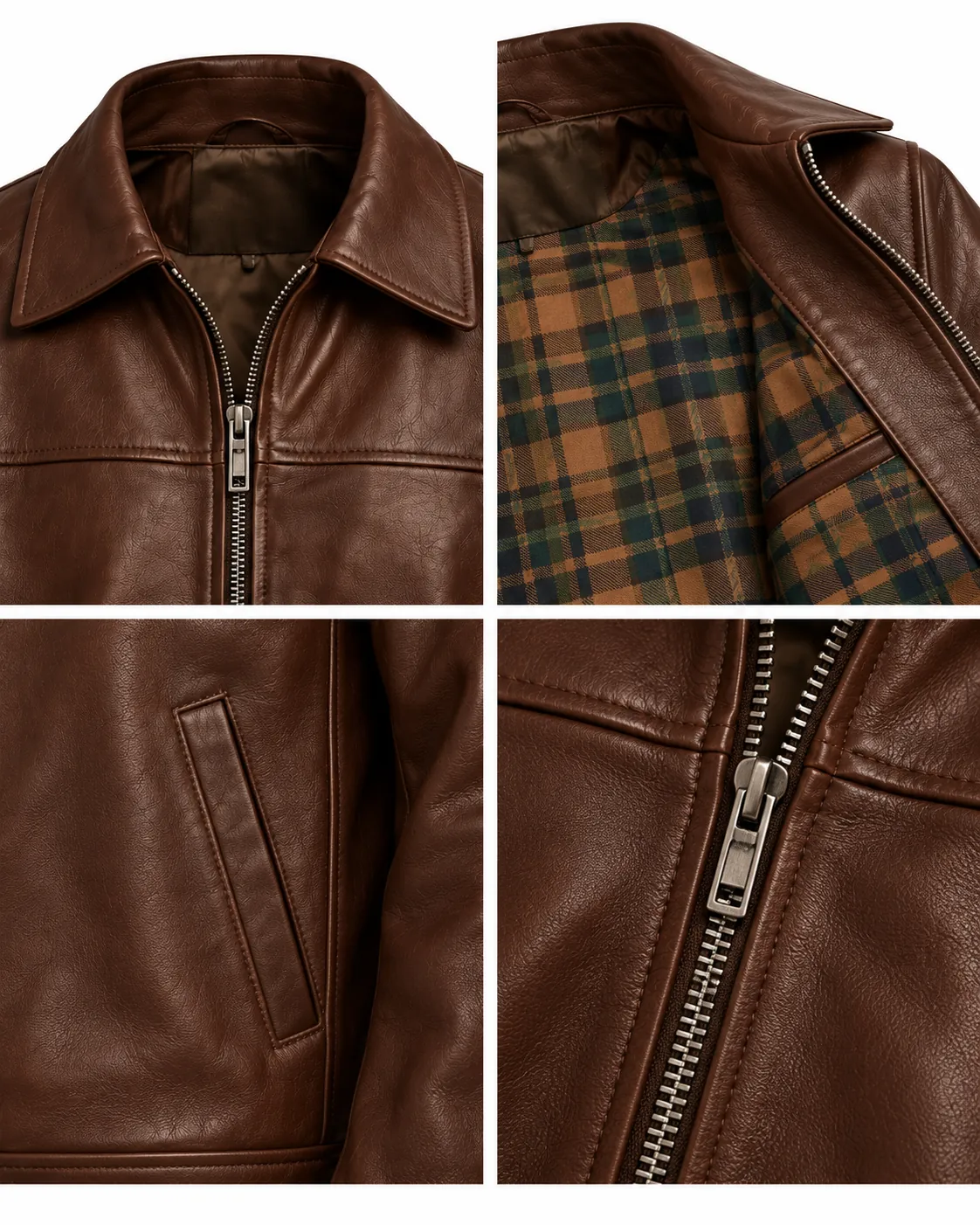
- Inspect several close-up photographs. Use photos of the collar, pocket, seam, edge, zip, lining and back—not only the front image. Repeating the same polished hero photo from three angles does not add useful evidence.
- Check construction where stress occurs. On a jacket, examine shoulder seams, pocket corners, cuffs and the zip. On a bag, look at handles, attachment points, strap edges and the base. On a belt, focus on the buckle attachment and the cut edge.
- Compare measurements, not just size labels. A size L from one maker can be very different from a size L from another. For clothing, compare listed garment measurements with an item you already own. For bags, check width, height, depth and strap drop against what you actually carry.
- Find the care guidance. Care details signal that a seller expects the item to be used for years, not merely photographed. More importantly, they help you decide whether the product suits your routine and climate.
- Read the current delivery and return terms. A transparent policy does not prove the material, but it reduces the risk of buying without a way to resolve a size or condition issue. Check the live terms rather than relying on a social-media comment or an old screenshot.
- Ask one direct question in writing. For example: “Please confirm the outer material and whether the listed measurements are garment measurements.” The usefulness and consistency of the answer tell you more than a generic “yes, original” reply.
- Keep your decision evidence. Save the product URL, material description and chat reply before paying. If the delivered item differs from what was described, you will have a clear record of the listing you relied on.
Do not try to prove an online leather claim from one signal. Use the listing, close-ups, specifications, seller response and policy together. When key information is missing, waiting is a better purchase decision than guessing.
How to read product photographs without being misled
Good product photography should answer practical questions. Does the jacket have a cleanly finished collar? Where does the bag's strap attach? How much structure does the shoe have around the heel? Can you see the reverse side and the lining? A single front image cannot answer all of that.
| Photo to look for | What it helps you assess | What it cannot confirm alone |
|---|---|---|
| Front and back view | Overall shape, panel layout, length and colour balance | Material composition or thickness |
| Close-up of seams and edges | Stitching consistency, edge finishing and panel alignment | Long-term durability |
| Hardware close-up | Zip type, snaps, buckle finish and attachment points | Whether hardware will never fail |
| Lining or interior view | Interior layout, pockets and lining finish | Fit on your body or capacity for every use case |
| Person or scale image | Relative proportion and how the item sits when worn | Your exact fit or a product's material |
Be cautious with strong filters and extremely low-resolution images. They can make texture difficult to judge and hide details at the seams. Equally, do not assume that natural marks always mean a better product. Finishing, leather type and the intended use all matter. The goal is not to act as a forensic examiner from your phone; it is to decide whether a seller has supplied enough reliable information to earn your order.
Four questions worth asking before you order
Long messages often receive vague answers. These four questions are short enough to send on WhatsApp, Instagram or email, while still creating a useful record.
- “What is the exact outer material, and is any part synthetic, bonded or coated?” This requests a specific description rather than a broad assurance.
- “Can you share a clear photo of the lining, inside label and close-up stitching?” It tells you whether the seller can provide the views you need.
- “Are these finished garment measurements or body measurements?” This prevents a common sizing mistake with jackets and other wearable goods.
- “What should I do if the delivered item differs from the product description?” The answer should align with the store's published return or exchange terms.
A trustworthy answer need not be long, but it should be direct. Avoid treating phrases such as “best quality”, “imported”, “export leftover” or “100% original” as a substitute for a material specification. They are marketing language until supported by useful details.
Jackets, bags, shoes and accessories: what changes?
The same buying principles apply to every leather category, but the areas of highest wear are different. Use the category-specific checklist below after you have confirmed the basic material information.
- Leather jackets: prioritise shoulder fit, sleeve length, lining, zip movement and room for the layers you will actually wear. Our leather jacket sizing guide explains how to compare measurements before ordering.
- Leather bags: examine handle and strap reinforcement, base structure, inside pockets, closure and dimensions. A beautiful bag that does not fit your laptop, phone or daily essentials is not a good buy.
- Leather shoes: check the size conversion, sole construction, toe shape, lining and break-in expectations. Shoes need accurate size information more than an attractive product photograph.
- Leather accessories: look at the buckle, rivets, stitching, edges and the exact usable length. For a wallet, check the notes, cards and coins you carry rather than assuming every compartment will suit you.
LeatherCulture currently offers a leather-jacket collection. Its category pages also show the wider direction of the store, including leather bags, leather shoes and leather accessories as those ranges become available. Always rely on the exact live product page for the product's current material, price, size and stock information.
A practical checklist for buyers in Pakistan
Online purchases in Pakistan have a few extra practical points. Before you check out, confirm your full delivery address and a phone number that will be available to the courier. If payment is cash on delivery, know who will receive the parcel and who will pay. If the item is a gift, sending it to the recipient without planning the payment can spoil the surprise.
Climate matters too. A heavy jacket may be useful for cold evenings in Islamabad, Rawalpindi, Lahore or northern areas, while a lighter layer may see more use in Karachi. For any leather product, plan for dry, breathable storage during humid months; direct heat, sealed plastic storage and prolonged damp are poor companions for leather. Our leather-care guide for Pakistan covers an easy storage routine for jackets.
Finally, compare the total cost, not just the headline price. Include delivery, any return-courier responsibility and the value of a return policy that is clear enough to use. The lowest listed price is not automatically the lowest-risk purchase.
How to use this checklist on LeatherCulture
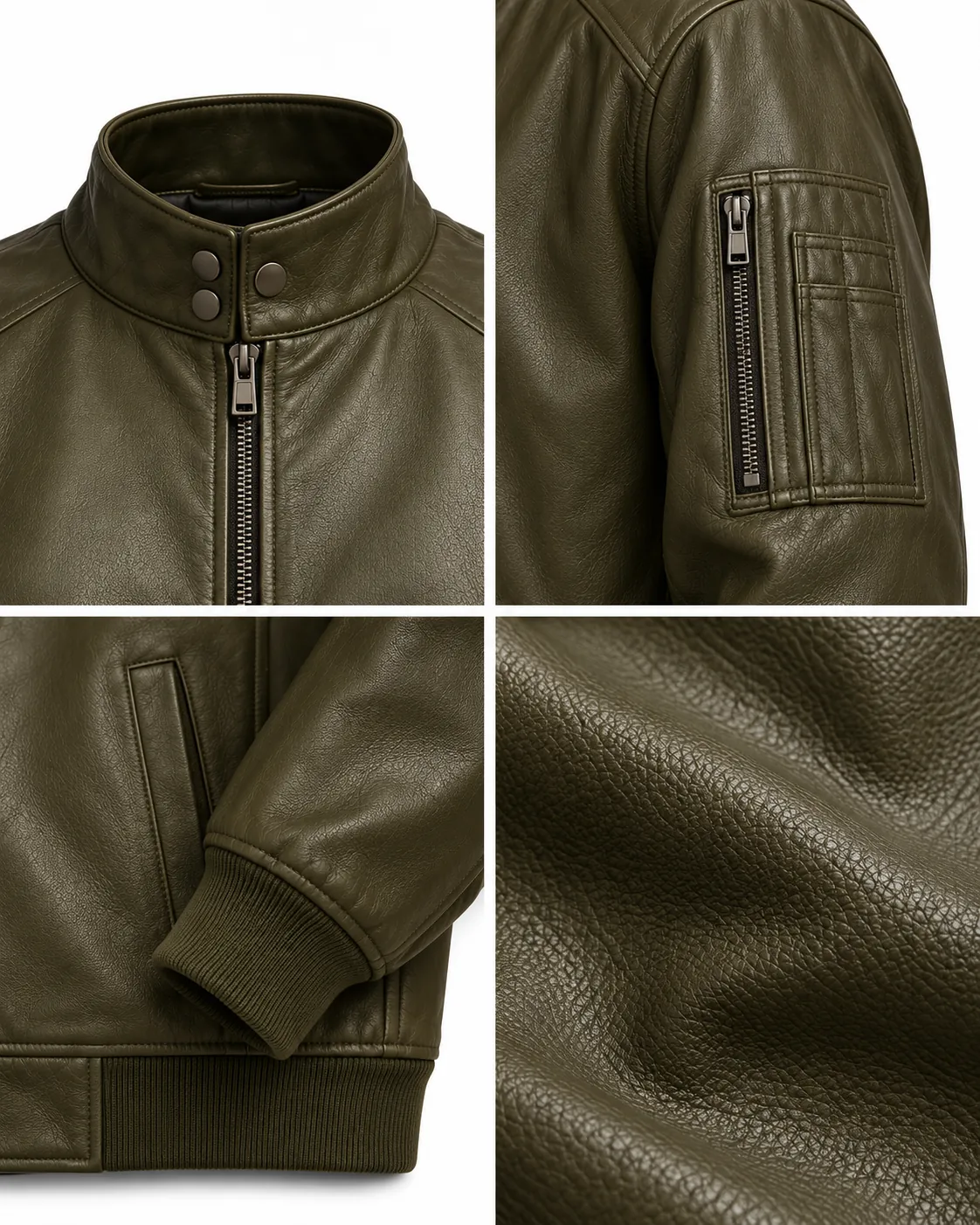
Start by browsing the current LeatherCulture shop, then open the individual design that suits your wardrobe. For example, a collared silhouette such as The Heritage is an easy place to start if you want a classic look, while The Nomad offers a cleaner stand-collar profile. Use the photos to compare the design, then check the live listing and contact the store if any material, measurement, availability or delivery detail is unclear.
That process is intentionally more careful than buying from a single picture. It helps you select the right style, asks the right factual questions and keeps expectations clear from the first click to delivery.
Frequently asked questions about original leather online
Can I tell if leather is original from an online photo?
No. Photos can reveal design and finishing details, but they cannot independently verify the material. Use the written specification, several detailed images and a direct seller response together before you order.
Is “genuine leather” the same as high-quality leather?
Not necessarily. The phrase may describe animal hide, but it does not by itself tell you the hide type, grade, thickness, finish or construction. Ask for the details that matter for the item you are considering.
What is the safest question to ask a leather seller online?
Ask for the exact outer material and whether any part is synthetic, bonded or coated. Then ask for clear close-up photos and confirm whether the listed measurements are garment measurements or body measurements.
Why should I check a return policy before buying leather online?
A return policy will not prove the material, but it tells you what process is available if the delivered item has a sizing, condition or description issue. Read the current policy before placing the order.
Which LeatherCulture page should I visit first?
Visit the LeatherCulture leather-jacket collection to see current designs, then open the exact product page for live details. Use the shop page and product information—not this guide—as the final source for price, availability and product specifications.
Buy with evidence, not just a feeling
Original leather is worth buying thoughtfully. A clear description, useful close-ups, honest answers and a practical policy turn an attractive listing into a decision you can stand behind. Keep this checklist open while you browse, and start with the current LeatherCulture collection when you are ready to compare styles.