
Choosing between original leather and faux leather in Pakistan is less about winning an argument and more about choosing the right item for your routine. A jacket worn every winter, a bag carried to work every day and a belt used occasionally are three different decisions. The useful question is: which material, construction and care commitment make sense for the next five years of use?
Original leather can develop a softer hand and a visible patina with use. Faux leather can offer a uniform appearance, a lower entry price and a specific fashion look. Neither label tells the whole story. Material clarity, construction, fit, repairability and how often you will actually use the item matter just as much.
Choose original leather when the seller clearly explains the material, the construction suits your use and you are comfortable with simple care over time. Consider faux leather when its specific price, look and expected lifespan fit a short-term or occasional need. Do not rely on a photo, smell test or one marketing phrase to decide.
What do original leather and faux leather mean?
In everyday shopping language, original leather normally means material made from animal hide or skin rather than a synthetic lookalike. That phrase is broad, not a quality grade. Hide type, finish, thickness, lining, stitching and the intended purpose of the product can all vary. ISO's leather vocabulary is useful background because it distinguishes leather, split leather and materials made from leather fibres rather than treating every leather-related label as identical. For the differences inside that broad label, see our pure leather types guide.
Faux leather is an umbrella term for non-animal alternatives designed to give a leather-like appearance. A listing may use terms such as PU, synthetic leather, leatherette or vegan leather. Those words should be clear enough for you to understand what you are purchasing, but they do not predict the experience of every product. A well-made item in either category needs sensible design and construction.
There is also an important limit to online shopping: a photograph is not laboratory proof. ISO 17131 describes microscopy as a method for identifying leather and distinguishing it from other materials. Buyers are not expected to perform that test at home. The practical online equivalent is to seek a clear material description, useful detail photos and a direct answer from the seller before placing an order.
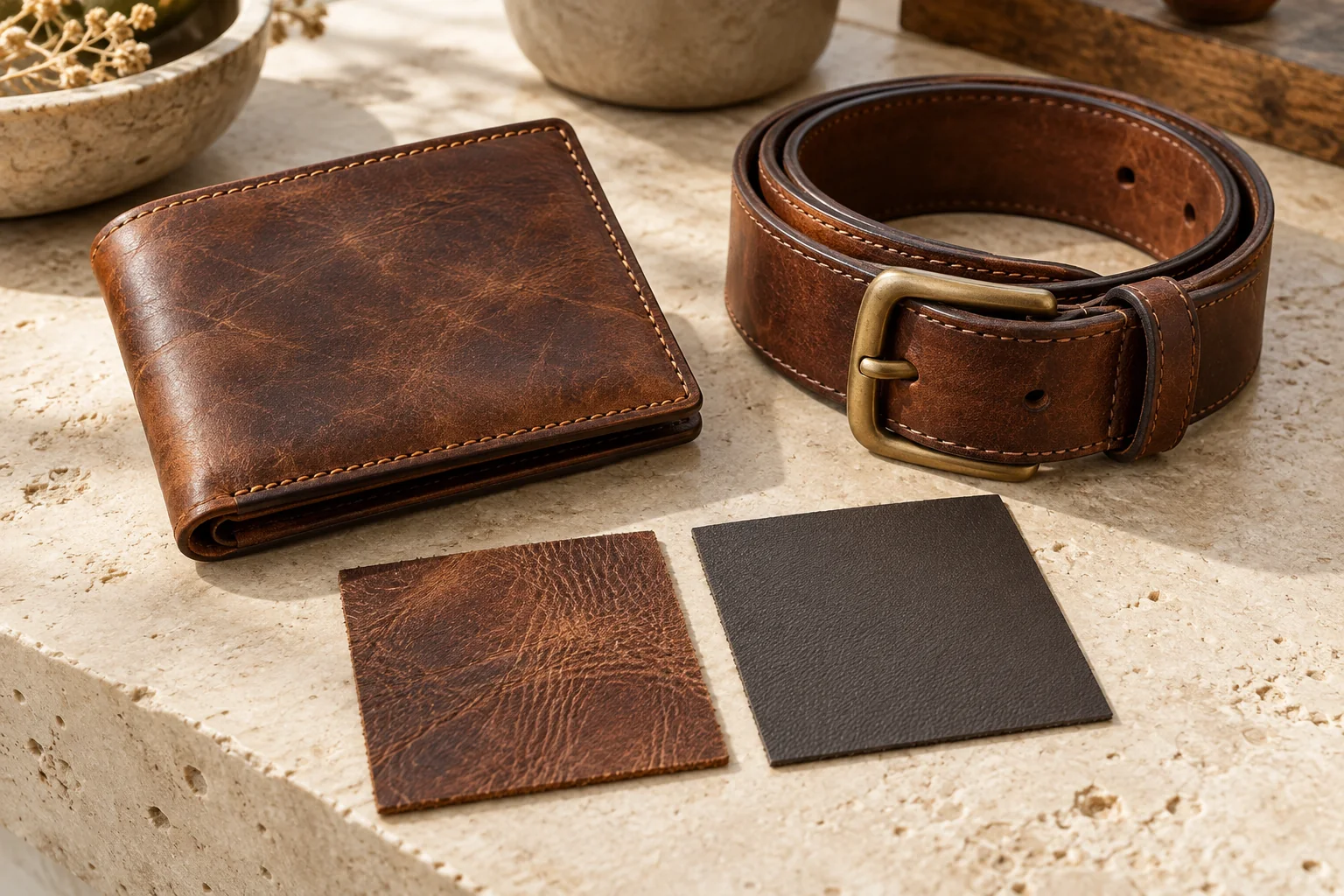
The five-year value test: five questions, not five promises
A five-year test is a planning tool, not a durability guarantee. It helps you avoid comparing only today's price. Start with these five questions:
- Will I use it often enough? A daily office bag, a weekend jacket and a wedding accessory deserve different budgets and care.
- Can I see how it is put together? Look at seams, pocket corners, strap anchors, edges, lining and hardware. These areas often matter more than a polished front image.
- What will normal wear look like? Natural leather can change in colour and character; synthetic surfaces may retain a more uniform look until wear becomes noticeable. Decide which appearance you will enjoy living with.
- Can the item be maintained or repaired sensibly? Ask about care before buying, and consider whether local cleaning or repair is realistic for the kind of piece you are choosing.
- Will the silhouette still work for me? A classic fit, useful pocket layout and practical dimensions are often better value than a trend you may stop wearing quickly.
Do not assume that original leather is automatically the better purchase, or that faux leather is automatically poor value. Choose the product with the clearest information, the right use case and an ownership plan you can realistically follow.
Original leather vs faux leather: a buyer's comparison
The table below is a decision aid, not a scorecard. Quality varies within both categories, and a seller's exact product specification should always take priority over broad material assumptions. The same goes for city names, as our Sialkot, Karachi and Lahore buying guide shows.
| Decision point | Original leather | Faux leather | What to verify |
|---|---|---|---|
| Material disclosure | Ask for hide type, finish and which panels are leather. | Ask whether the material is PU, another synthetic or a mixed construction. | Do not accept vague phrases such as "premium" as the whole specification. |
| Surface character | May show natural variation and change with wear, depending on its finish. | Often presents a more even, repeatable surface. | Look at close-ups in natural-looking light and ask for additional views if needed. |
| Maintenance | Needs product-appropriate storage and occasional care. | Still needs cleaning and careful storage; check the seller's instructions. | Ask for care guidance before checkout, especially for light colours or frequent use. |
| Long-term value | Depends on material, construction, care and whether you continue wearing it. | Depends on the product's build, finish, use frequency and whether it meets your intended time horizon. | Compare likely wears, not only the checkout price. |
| Repair decision | Some issues may be serviceable by a suitable specialist, depending on the damage and construction. | Repair options can be different and may be limited by the material or finish. | Check hardware, stitching and stressed areas before purchase rather than planning around a future repair. |
Apply the test to jackets, bags, shoes and accessories
Leather jackets: Fit is the first value decision. Check chest, shoulder, sleeve and length measurements against a jacket you already own. Then inspect the zip, cuffs, pocket corners and lining. A jacket with a material you like but no room for your normal layer will spend more time in the wardrobe than on you.
Leather bags: Think beyond the front view. Measure the laptop, notebook or essentials you carry; examine handle reinforcement, strap attachment, closure, base and interior layout. A bag earns its value when it works on ordinary days, not just in a product photo.
Leather shoes: Prioritise fit, toe shape, lining and sole construction. Check the size chart and return process before ordering. Shoes experience repeated flexing and contact with the ground, so comfort and accurate sizing matter more than a material claim by itself.
Leather accessories: For belts, inspect usable length, buckle attachment and edge finishing. For wallets and card holders, count the cards, notes and coins you actually carry. A smaller item is not automatically a lower-stakes purchase if you use it every day.
LeatherCulture's current leather-jacket collection is a practical place to compare silhouettes. The store is also being developed for bags, shoes and accessories; use the live shop page and the exact product listing as the final authority for material, price, availability, size and delivery information.
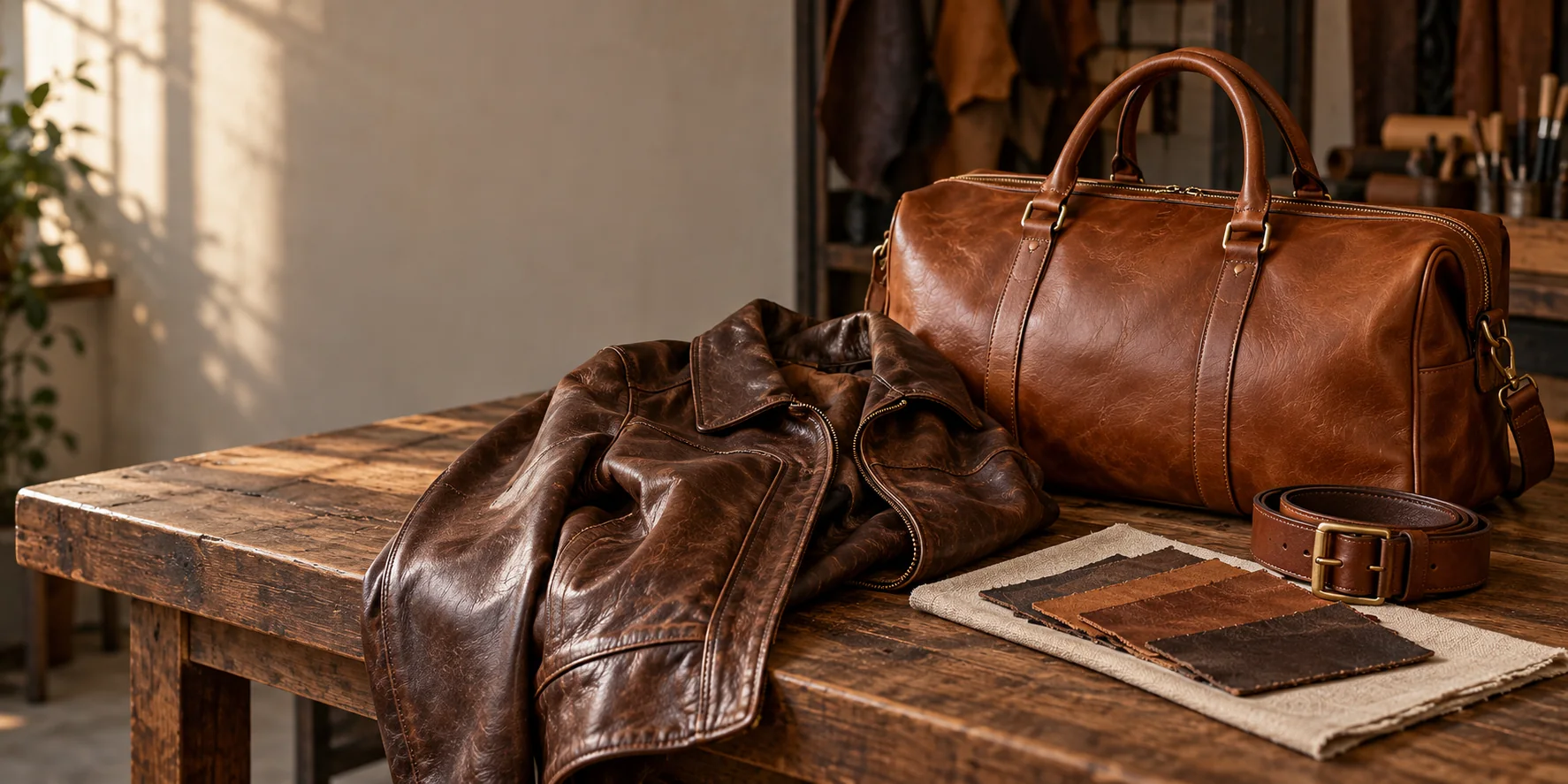
How to compare price without guessing
A useful comparison starts with the total cost and your expected use. Instead of asking only, "Which option is cheaper?", ask, "How many times will I realistically wear or carry it?" Divide the all-in purchase cost by a conservative number of planned uses. This is not a promise about lifespan; it is a way to make your own priorities visible.
For example, a jacket you expect to wear 30 times a season deserves more scrutiny around fit and construction than an accessory you will use twice a year. Add delivery, possible exchange costs and basic care supplies to the decision. If the seller cannot answer an essential material or measurement question, the apparent saving may not be worth the uncertainty.
Care for Pakistan's climate: keep the routine simple
In Pakistan, heat, humidity, dust and long periods of storage can all affect how an item looks and feels. Store leather goods dry and breathable, away from direct heat and prolonged damp. Avoid sealing a leather item in plastic for long stretches, and allow a jacket, bag or pair of shoes to air after use before putting it away.
Use the care instructions for the specific product rather than applying a one-size-fits-all home remedy. Leather Working Group's consumer guidance makes the same practical point: care advice should be specific to the leather and the product. If an item gets a stain, loses shape or needs conditioning, ask the retailer or a qualified specialist before trying an aggressive cleaner.
How to buy original leather online with more confidence
Before you buy, open the product page and work through a short evidence check: material wording, close-up images, measurements, care guidance, delivery terms and a direct question if anything remains unclear. Our 10-point original leather online checklist gives you a quick version of that process.
Then browse the LeatherCulture shop for the designs that suit your wardrobe. If you need help deciding between sizes, styles or a current product detail, use the store's contact page before ordering. That is a better outcome than purchasing on an assumption.
Frequently asked questions about original leather vs faux leather
Is original leather always better than faux leather?
No. The right choice depends on the exact product, the transparency of its specification, your budget, the desired appearance and how long you expect to use it. Original leather is not a single quality level, and faux leather is not a single material.
Can I identify original leather from a photograph?
No. A photo can help you assess design and finishing, but it cannot independently verify material composition. Read the product specification, request close-up images and ask the seller a direct question before ordering.
What should I ask an online seller about a leather jacket?
Ask for the exact outer material, whether any panels or trims are synthetic, the garment measurements, and the relevant exchange or return process. For a jacket, compare those measurements with one you already own.
Does original leather need special care in Pakistan?
It needs sensible storage and product-specific care. Keep it dry and breathable, away from long periods of direct heat or damp, and follow the retailer's guidance for cleaning or conditioning.
Where can I compare LeatherCulture styles?
Start with the LeatherCulture leather-jacket collection or the full shop. Use each live product page as the source for its current price, availability, sizes and material details.
Choose the story you want to live with
The best purchase is not defined by a label alone. It is the item whose material, build, fit and care requirements match the way you actually live. Use the five-year value test, ask for the details that matter and explore the current LeatherCulture collection only when the information is clear enough for you to decide with confidence.