
A good leather briefcase in Pakistan does more than carry a laptop. It needs to survive crowded commutes, protect the things you take to work, sit neatly in a meeting and still feel comfortable when your day runs long. That is why choosing one by colour alone is risky. The useful questions are practical: does your laptop fit with its sleeve on, can the handle anchors carry a full bag, and is the material described clearly enough to know what you are buying?
For an everyday office briefcase, start with your laptop measurements, then choose a shape with a little spare room rather than a tight squeeze. A clear material description, strong handle and strap anchors, a smooth zip, protective lining and realistic internal organisation matter more than a broad “original leather” label alone.
Choose the job before the leather
“Office bag” can mean very different things. A compact portfolio for a notebook and charger needs a slim profile. A daily laptop bag may need a padded sleeve, a document section, a bottle pocket and a shoulder strap. A travel-friendly briefcase may need a wider base, stronger zip pulls and enough structure to keep papers from folding in on themselves.
Make a small list of what you carry on an ordinary weekday: laptop, charger, mouse, phone, notebook, documents, keys, glasses and perhaps a lunch container. Then separate the items that need protection from the ones that simply need a pocket. This keeps you from buying a handsome but impractical bag with too many tiny compartments and no useful main section.
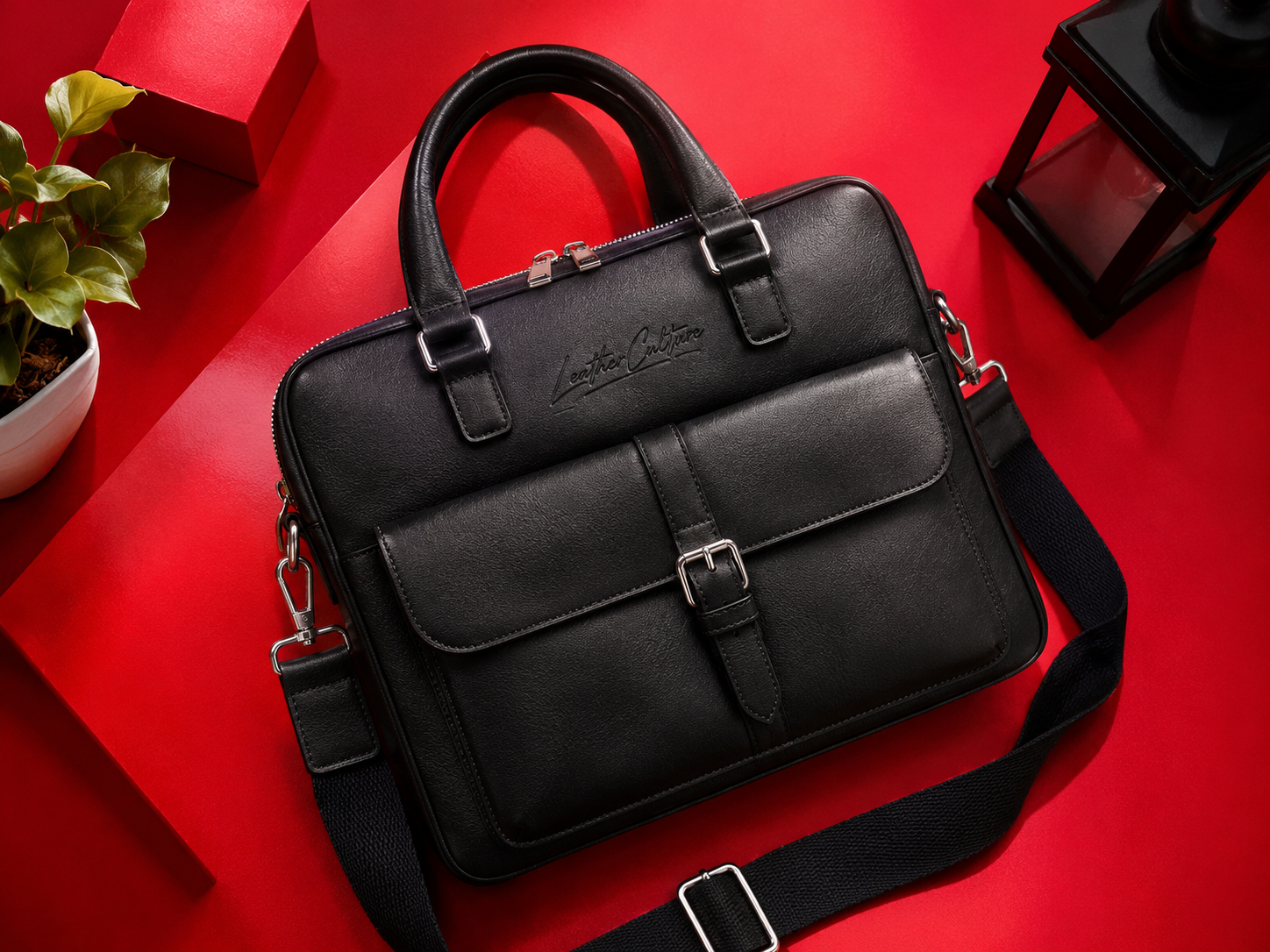
How to check laptop fit before buying a briefcase
A “15.6-inch laptop bag” label is only a starting point. Screen size is measured diagonally, while a bag’s useful space is controlled by its internal width, height and depth. Two laptops with the same screen size can have noticeably different outer dimensions.
- Measure the laptop’s outer width, height and thickness, ideally while it is inside the protective sleeve you normally use.
- Compare all three measurements with the seller’s internal compartment measurements. If only outside dimensions are listed, ask before ordering.
- Leave sensible space around the edges. A bag that needs force to close is not protecting the device or the zip.
- Check the opening shape. A compartment can be wide enough on paper but awkward to use if the zip opens only part-way.
- Think about the charger. A bulky adapter pressing against an unpadded laptop is a poor arrangement; a separate sleeve or pocket is better.
Ask a direct, useful question: “My laptop, in its sleeve, is 36 cm wide, 25 cm high and 2.5 cm deep. Will it fit in the protected section without forcing the zip?” A dependable seller can answer that more clearly than a generic size tag can.
Which pure leather type is best for an office briefcase?
People often search pure leather type when they want to know whether a briefcase will stay neat under real use. The answer is not one magic material. The right choice depends on the bag’s weight, shape and the surface you prefer. Ask for the hide and finish, rather than assuming that “pure leather” explains it all.
| Leather type | How it tends to feel | Best suited to | Worth asking about |
|---|---|---|---|
| Cowhide | Balanced, structured and durable | Daily laptop and document briefcases | Thickness, lining and whether the bag is reinforced at the base |
| Buffalo leather | Often thicker with a more pronounced grain | Heavier office or travel loads | Overall bag weight and how quickly the handles soften |
| Goatskin | Light for its strength, naturally textured | Slim portfolios and lighter everyday bags | Whether the structure is sufficient for a laptop |
| Lambskin | Soft and supple | Light, dressier carry rather than hard daily loads | How the surface is protected from scuffs |
| Split, bonded or coated material | Can vary widely in appearance and durability | Only when the listing clearly describes it and it suits your budget | The exact construction; do not assume it is a full hide |
Natural hide can show small marks and grain changes. That is not automatically a defect. At the same time, a perfectly uniform surface is not proof that a bag is synthetic; some leather is finished or embossed for a consistent look. The important thing is honest description. Guidance from the US Federal Trade Commission notes that bonded or reconstituted material should not be presented as plain leather. Use that principle as a buyer: ask what the outer material actually is.
Eight checks before you buy an original leather briefcase online
1. Handle anchors
The handle is often the first part you notice and one of the hardest-working parts of the bag. Look for wide attachment patches, even stitching and hardware that sits flat. A full briefcase puts much more strain on those points than an empty product photo suggests.
2. Shoulder-strap clips and D-rings
If you use public transport, a shoulder strap may matter more than top handles. Check that the clips are substantial, the D-rings are securely attached and the strap has an adjustable section. Ask whether the shoulder strap is removable if you prefer a cleaner meeting-room look.
3. Zip travel and opening width
Look for a continuous view of the zip, not only a decorative close-up. It should have a protected fabric or leather surround, and the opening should be wide enough to remove a laptop without bending it. A short video of the zip working is more useful than a still image.
4. Laptop padding and lining
For a laptop bag, a separate padded sleeve is more useful than a loose main compartment. Check where the padding sits and whether the lining is neatly stitched. A lining that catches on the zip or pulls away at the seam will age badly even if the outer leather looks good.
5. Base structure
Set down a loaded briefcase in your mind: does it have a flat, supported base or will it slump? Some buyers prefer feet to keep the bag off damp or dusty floors; others prefer a cleaner base. Either choice can work, but the base should suit the load and your routine.
6. Useful pockets, not just many pockets
Count what you will actually use. One phone pocket, one charger space and one document section can be more practical than six shallow organisers. Make sure the front pocket has enough depth for the item it is meant to hold.
7. Edge finishing and seams
Examine corners, flap edges and strap sides. Finished edges should look clean and consistent, while seams should be straight with no loose thread tails. Corners deserve special attention because they meet desks, floors and car seats first.
8. Dimensions, weight and after-sales information
Ask for external dimensions, internal laptop-section dimensions and bag weight if they are absent. Also read the exchange terms before paying. Clear information is part of the product: it shows you whether the seller expects the bag to match the listing.
How to read a briefcase listing without falling for the hero shot
A polished front image is useful for style, but it cannot answer the questions above. Before you order an original leather office bag in Pakistan, look for front, back, side, interior and base photos. Ask for a close view of the handle attachment, shoulder-strap hardware and laptop sleeve if any of those are missing.
Do not use flame, water or scratch tests on a new purchase. They can damage a bag and make an exchange difficult. Online, the better evidence is a material statement, detailed photographs, dimensions, a video of the hardware where needed and a seller who answers normal questions plainly. For broader material checks, read our guide to original leather versus faux leather in Pakistan.
Looking after a briefcase in Pakistan
Office bags face a quiet mix of damage: dust, heat in a parked car, rain during a commute and humidity while stored. Empty the bag before storing it, wipe dust away with a soft dry cloth and use clean paper inside to help it hold its shape. Avoid plastic covers for long-term storage; leather needs airflow.
If the bag gets wet, remove the contents, blot the surface and let it dry at room temperature. Do not put it in direct sun or use a hairdryer. The Canadian Conservation Institute notes that relative humidity above 65% supports mould growth on leather, so give the bag space and air in humid weather. Test any conditioner on an inconspicuous area first, because finishes can darken.
Frequently asked questions
Is a pure leather briefcase always better than a synthetic laptop bag?
Not automatically. A briefcase should suit your workload, weather and budget. Real leather may age attractively with care, while a well-designed synthetic bag can be lighter or more weather-resistant. What matters is a clear material description and construction that fits your use.
Which briefcase size is right for a 15.6-inch laptop?
Measure the laptop’s actual outer dimensions, including its sleeve, and compare them with the bag’s internal laptop-compartment measurements. Do not rely on screen size alone, because different 15.6-inch models have different bodies.
What is the most durable leather type for an office bag?
Cowhide and buffalo leather are commonly chosen for structured, heavier-use bags, while goatskin offers strength at a lighter weight. Construction still matters: weak handle anchors or poor lining can limit any bag’s useful life.
Should I buy a shoulder strap with a leather briefcase?
If you walk, commute or carry a laptop regularly, an adjustable shoulder strap can make a substantial difference. Check the clip hardware and anchor points, and choose a removable strap if you want the option of a cleaner formal look.
How do I know whether an online leather briefcase is worth the price?
Compare material details, internal dimensions, lining, hardware, close photographs, delivery cost and exchange terms—not only the headline price. A briefcase that fits your device and shows its construction clearly is easier to judge fairly.
Choose a bag that works after the first meeting
A briefcase should make the working day easier, not make you organise around its limits. Measure your laptop, think about how you travel, and check the places that carry the load before you order. Explore the LeatherCulture shop for the current collection, or contact the team to ask about availability and product details.