
When you search for an original leather wallet in Pakistan, the first choice is often not colour or price. It is shape. A slim wallet promises less pocket bulk; a bifold promises room for cash, cards, CNIC and the small receipts that somehow collect through the week. Neither is universally better. The right one is the wallet that holds your usual carry without turning a clean leather fold into a permanent bulge.
Choose a slim wallet or card holder if you mainly carry a few cards, one ID and limited cash. Choose a bifold if you need separate notes, more cards or regular receipts. Whichever style you choose, ask about the original leather type, inspect the fold and stitching, and do not fill every slot just because it is there.
Slim wallet versus bifold: the real difference
A slim wallet is designed to carry less. It may be a card holder, a small folded case or a thin wallet with a central pocket for folded notes. It sits flatter in a trouser or jacket pocket and makes you decide which cards are genuinely useful. That restraint is its advantage.
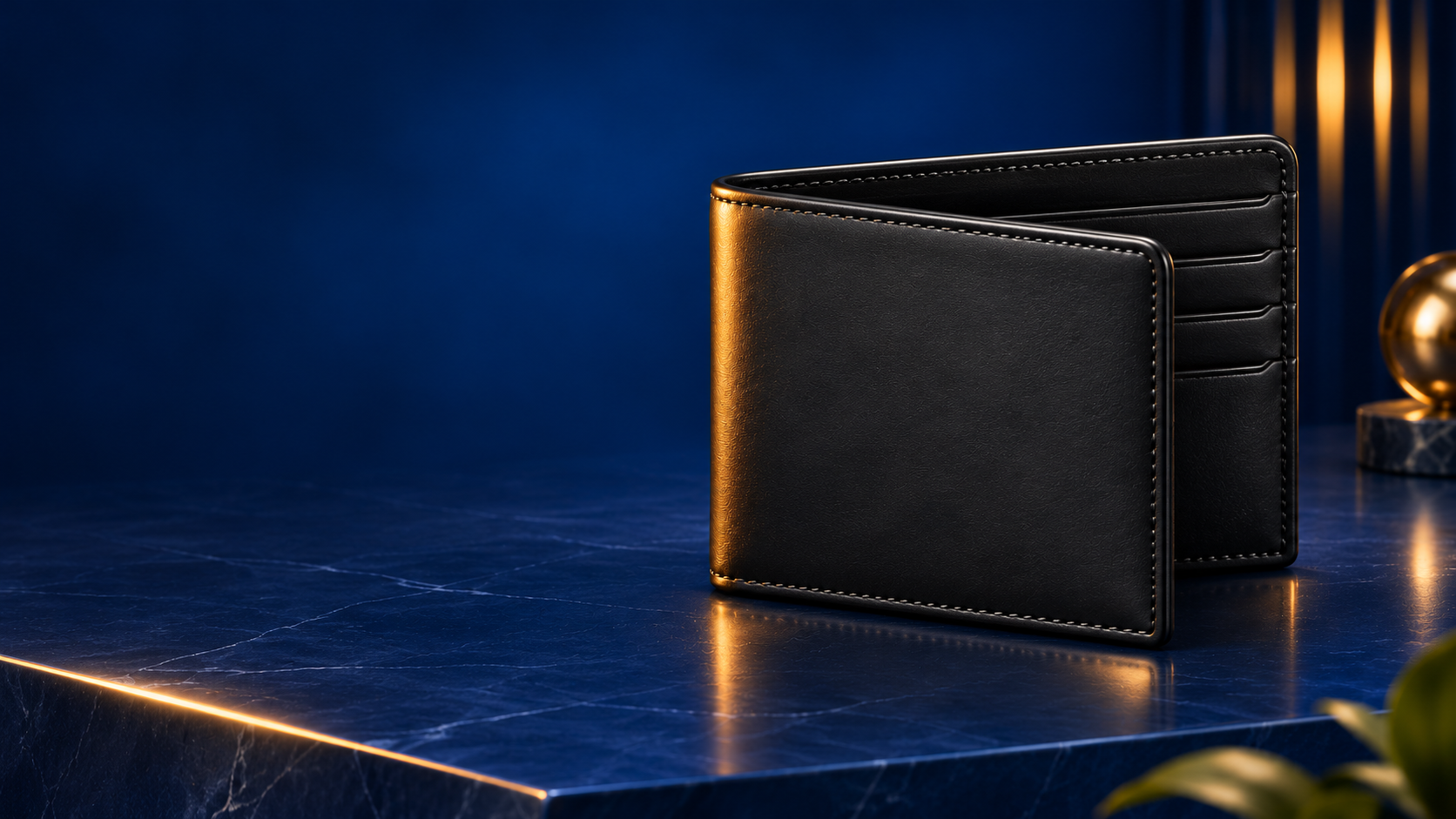
A bifold uses one central fold to create more storage without becoming as large as a long wallet. It normally gives you card slots on both sides and at least one full-length space for notes. It is the familiar everyday choice if you carry your CNIC, debit cards, a little cash and occasional receipts. Its weakness is overfilling: every extra card, paper slip and coin increases pressure on the fold and edges.
| Your usual carry | Better starting point | What to look for |
|---|---|---|
| 2–4 cards, one ID, a few folded notes | Slim wallet or card holder | Firm card slots, a secure central pocket and thin edges |
| CNIC, bank cards, notes and 1–2 receipts | Compact bifold | Enough slots without a thick spine or bulky coin section |
| Several cards, cash and frequent paper receipts | Standard bifold or larger wallet | Separate note area, sound fold and sensible organisation |
| Mostly digital payments and a backup card | Minimal card holder | A snug fit and a layout that does not let the card slide out |
| Travel documents or many notes | Long wallet or travel organiser | Capacity, zip quality and a secure closure rather than pocket slimness |
Count what you actually carry before looking at card slots
More card slots do not automatically make a wallet better. They can encourage you to carry expired cards, old memberships and stacks of receipts that make the leather stretch unevenly. Empty your current wallet onto a table and sort it into three groups: items you use weekly, items you need only occasionally and items you no longer need.
- Keep daily essentials. CNIC, the bank cards you use, one emergency note and any work ID you need.
- Move occasional items. Extra cards, loyalty cards and spare documents can live in a bag or drawer.
- Clear receipts weekly. They add thickness quickly and rub against the lining.
- Do not force tight new slots. Leather eases with normal use; forcing several cards into one slot can permanently distort it.
This exercise makes the decision clearer. If your daily group fits in a few card slots and a central pocket, a slim wallet will feel freeing. If you regularly need unfolded notes, more IDs or several cards, a bifold is usually more comfortable than pretending to be a minimalist.
Original leather and “pure leather type” explained
Terms such as original leather, pure leather and genuine leather are common shopping phrases, but they do not give you a complete specification. The useful follow-up is: which hide, which layer and which finish? A product description that says cowhide, goatskin, full-grain, top-grain or a clearly described finished leather gives you more to work with than a slogan alone.
For a wallet, the leather needs to fold repeatedly without becoming stiff or overly thick. Cowhide can offer a structured, durable feel; goatskin can be light with a visible natural grain; lambskin is soft but needs gentler treatment. There is no one perfect pure leather type. The best type depends on the wallet’s thickness, the number of layers, its finish and how much you carry inside.
Bonded or reconstituted material is different from a complete hide. The US Federal Trade Commission’s material guidance says it should not be represented simply as leather. Use that as a buyer habit in Pakistan too: ask for a specific material answer and look for close photographs of the surface, fold and cut edges.
Six details to check before buying a leather wallet online
1. The fold line
Open the wallet in the product photos. The central fold should look clean and relaxed, not pulled tight. This is the point that bends most often, so it should not be overloaded with thick internal layers.
2. Card-slot stitching
Card pockets combine several thin layers. Look for straight, evenly spaced stitching and corners that lie flat. Loose threads and wavy edges are easy to spot in a close image and are worth asking about.
3. Edge finishing
The outside edge of a wallet sees constant friction against a pocket. It should be folded, painted or burnished neatly. A thick, cracked-looking coating or rough exposed layers are warning signs.
4. The note compartment
If you use cash, check whether notes lie flat or need to be folded. A full-length compartment is useful for people who keep notes straight; a smaller wallet may deliberately prioritise compact carry instead.
5. Thickness when closed
Look for a side photograph or ask for the closed thickness. A wallet may look slim when empty but become uncomfortable if it starts with too many layers.
6. Clear material and exchange information
Ask what the outer material is, what the lining is made from and what happens if the wallet arrives different from the description. Keep the answer with your order record.
How to keep a wallet slim and useful for longer
Leather responds to the way it is used. Rotate out old cards, do not sit on an overfilled back-pocket wallet and avoid leaving it in a hot car. If it gets wet, blot it gently and allow it to dry at room temperature; do not use a hairdryer or radiator. A soft dry cloth is usually enough for regular dust.
For longer storage, empty the wallet and leave it somewhere dry with airflow instead of sealing it in plastic. The Canadian Conservation Institute notes that humidity above 65% can favour mould growth on leather. Good everyday habits are usually more valuable than frequent heavy conditioning.
Frequently asked questions
Is a slim wallet better than a bifold?
A slim wallet is better when you genuinely carry only a few cards and little cash. A bifold is better when you need more card slots, notes and everyday documents. Choose the shape that fits your normal carry rather than the one that looks smallest when empty.
How many cards should a leather wallet hold?
Carry the number you use regularly and avoid forcing multiple cards into a slot designed for one. New leather card slots can relax slightly over time, so overstuffing them at the start can leave them loose or misshapen.
Which pure leather type is good for a wallet?
Cowhide, goatskin and lambskin can all work, depending on thickness and finish. A wallet must fold comfortably, so good patterning, stitching and edge finishing are as important as the hide itself.
How can I check whether an online wallet is original leather?
Ask for a clear material description, inspect close images of the fold, card slots and edges, and read the exchange terms. A vague phrase such as “pure leather” is not enough on its own.
Should I keep receipts in a leather wallet?
Temporary receipts are fine, but clear them regularly. A pile of papers adds bulk, puts pressure on the fold and can leave the wallet misshapen over time.
Choose the capacity you will use
A wallet should simplify your day, not become a tiny storage drawer. Choose slim when your carry is light, choose a bifold when your essentials need space, and judge the original leather by clear material information and careful construction. Visit the LeatherCulture shop for current pieces or contact the team for product information.